Power Independence Home 
Home Search search Menu menu Not logged in - Login | Register

 Moderated by: Joe Kelley Page:  First Page Previous Page  ...  3  4  5  6  7  8  9  10  11  12  13  ...  Next Page Last Page  
New Topic Reply Printer Friendly
More  Rating:  Rating
AuthorPost
 Posted: Wed May 28th, 2008 02:25 pm
  PM Quote Reply
141st Post
Joe Kelley
Administrator
 

Joined: Mon Nov 21st, 2005
Location: California USA
Posts: 6399
Status: 
Offline
Mana: 
http://azsustainably.com/2008/05/21/want-20-percent-wind-power-by-2030-get-to-work/


  • Page 16: Power plants use more water than agriculture. There may be a technical issue because power plants withdraw more water than agriculture, but they might return enough of it that they actually consume less water than agriculture. Either way, wind farms use much less water than other types of power plants (this is an area in which nuclear loses dramatically) and could be developed to save 450 billion gallons of water annually. The southwest should consider that a huge benefit of wind power.
  • Page 31: There is a physical limit to the energy efficiency of a wind turbine. [url=http://en.wikipedia.org/wiki/Betz'_law]Betz’ limit[/url] is that at most, 59% of the energy associated with a free stream can be extracted. Basically, if you remove too much of the flowing fluid’s energy (air is a fluid here), then it stops in its tracks and prevents any more fluid from passing through. If no more fluid passes through, then no more energy can be extracted. If that is the bad news, then the good news is that “Modern utility-scale wind turbines generally extract about 50% of the energy in this stream below the rated wind speed”.
  • Page 32, Figure 2-8: A great plot that shows the wind speeds at which a turbine will turn itself on, reach its maximum efficiency, and turn itself off to avoid damage.
  • Page 34, Figure 2-9: The cost of operation and maintenance versus the age of the equipment for very large wind harvesting facilities (i.e., generation greater than 5 MW). There are large error bars for the equipment that was installed up to 6 years ago. For example, wind power that was completely installed four years ago has an operating and maintenance cost with a standard deviation of ± 75%! This means that such a facility cannot accurately predict their operating costs based on other comparable sites. There are very few qualifying sites, however, so the statistics are not so good in the first place. The 75% standard deviation is calculated after reviewing only 17 facilities. Maybe one of them was just horribly mismanaged.
  • Page 36, Figure 2-10: Good luck reading the axes on this figure. Did someone just scan it from a Whole Foods bag?
  • Chapter 2: It’s odd that there is so much information in the section on technology improvements because the turbines already operate at very high efficiency (see page 31 reference above). Still, improvements in efficiency also include electricity transport so we should push for continued development.
  • Page 47, Figure 2-16: This figure shows blade size versus time along with markers for the construction of facilities to test the blades. There are no facilities in the U.S. that can test blades longer than 50 m, though blades larger than this are becoming standard for the large scale wind farms in development. These tests are very important, but the report states that manufacturers cannot afford to each have their own facility. Hopefully, government support of such an infrastructure will become part of the plan. This does not sound like something that is getting much coverage in the present discussion.
  • Page 47: Here is a funny quote, “Because blades are approaching sizes of half the length of a football field and can weigh more than a 12.2-m yacht, they are very difficult and expensive to transport on major highways.” The football field comparison is good, but how many people have a concept of the weight of a 12.2 m yacht?
  • Chapter 3: Do we have the resources to implement 20% electricity generation by wind? We might not have enough fiberglass (page 72), “For example, the glass fiber requirements would be about half the level used domestically for roofing shingles (which is currently the largest consumer of fiberglass) and about double the amount now used in boat building.” Even worse, we might not have enough qualified people (page 73), “In a report published by the National Science and Technology Counsel (NTSC) in 2000, the percentage of 22-year-olds earning degrees in science and engineering will continue to drop in the next 40 years”.
  • Page 80, Figure 4-2: Qualitative plotting of the grid load over multiple timescales. On the timescale of days the load is fairly regular. As to be expected, the load fluctuates more rapidly over the course of minutes.
  • Page 84, Figure 4-6: This is a plot of voltage control features at a wind farm currently in operation by General Electric. Impossible to read if printed out. The PDF view is not much better.
  • Page 89, Table 4-3: This table displays the “capacity factor” of midwest energy production between June 2005 and May 2006, which is the percentage of energy actually produced by the method (out of the total energy possible). Nuclear produces the best by putting out 75% of the total it is capable of producing. Wind hits 30%, but the point of this table is to show that all energy sources are needed to ensure that enough electricity is generated. Nuclear energy is getting more positive press and will hopefully continue to develop right along with wind.
  • Offshore wind technology is not as advanced as that for land based wind farms. This might turn out to be an expensive development that will slow the progress of wind power collection.
  • Page 106: Not in my backyard! The public might be one of the problems that prevents wind energy from reaching the 20% point. “About 10% to 25% of proposed wind energy projects are not built—or are significantly delayed—because of environmental concerns. Although public support for wind energy is generally strong, this attitude does not always translate into early support for local projects.” One of the more popular examples of this involves a U.S. Senator trying to prevent the building of a wind farm in his favored sailing seas.
  • Page 112, Figure 5-2: Wind turbines kill fewer birds than house cats. An environmental argument against wind power (I’ve heard it, but do not have a reference handy) is that the farms kill too many birds. If we outlaw house cats, then this might become a valid argument.

Back To Top PM Quote Reply  

 Posted: Wed May 28th, 2008 02:36 pm
  PM Quote Reply
142nd Post
Joe Kelley
Administrator
 

Joined: Mon Nov 21st, 2005
Location: California USA
Posts: 6399
Status: 
Offline
Mana: 
http://www.spiegel.de/international/business/0,1518,552901,00.html

Many wealthy West Germans leapt at this once-in-a-life-time opportunity, including some of Germany's biggest celebrities -- such as TV presenters Thomas Gottschalk and Günther Jauch -- to a former foreign minister Hans-Dietrich Genscher to lawyers, dentists and managers. They all poured money into real estate, ranging from single flats to giant office complexes and housing estates.


Back To Top PM Quote Reply

 Posted: Tue Jun 3rd, 2008 04:58 pm
  PM Quote Reply
143rd Post
Joe Kelley
Administrator
 

Joined: Mon Nov 21st, 2005
Location: California USA
Posts: 6399
Status: 
Offline
Mana: 
http://www.runcaronwaterguide.com/Convert-Your-Car-2-Run-On-Water-Reviews.aspx

Back To Top PM Quote Reply  

 Posted: Tue Jun 3rd, 2008 05:00 pm
  PM Quote Reply
144th Post
Joe Kelley
Administrator
 

Joined: Mon Nov 21st, 2005
Location: California USA
Posts: 6399
Status: 
Offline
Mana: 
http://www.thedailygreen.com/green-homes/eco-friendly/superlattice-lithium-batteries-460602

Superlattice Power says its new Lithium Ion Polymer battery would allow electric vehicles to be driven over 200 miles, compared to the current 120 to 140 mile range. They are said to be able to operate at a voltage range of 4.3V to 2V.


Back To Top PM Quote Reply

 Posted: Thu Jun 5th, 2008 06:29 pm
  PM Quote Reply
145th Post
Joe Kelley
Administrator
 

Joined: Mon Nov 21st, 2005
Location: California USA
Posts: 6399
Status: 
Offline
Mana: 
http://www.ecogeek.org/content/view/1704/


Cost of Solar Panels Expected To Plummet

It may also, though this is probably wishful thinking, push governments to start offering more incentives to those who install solar in a bid to use up the remaining capacity and financially support their manufacturers who by this point will be a very large industry, employing tens of thousands of people.


http://en.wikipedia.org/wiki/Silicon

On Earth, silicon is the second most abundant element (after oxygen) in the crust,[1] making up 25.7% of the crust by mass.


Last edited on Thu Jun 5th, 2008 06:31 pm by Joe Kelley

Back To Top PM Quote Reply  

 Posted: Fri Jun 6th, 2008 01:52 pm
  PM Quote Reply
146th Post
Joe Kelley
Administrator
 

Joined: Mon Nov 21st, 2005
Location: California USA
Posts: 6399
Status: 
Offline
Mana: 
http://www.dailygalaxy.com/my_weblog/2008/06/exponential-tec.html

·    Within 5 years the exponential progress in nanoengineering will make Solar power cost-competitive with fossil fuels

·    Within 10 years we will have a pill that allows us all to eat whatever we feel like and never gain any unwanted weight

·    In 15 years, life expectancies will start rising faster than we age

·    In about 20 years 100% of our energy will come from clean and renewable sources, and a computer will pass the Turing Test by carrying on a conversation that is indistinguishable from a human’s.

Commenting on the validity of Kurzweil’s predictions, John Tierney notes in the New York Times that Kurzweil has been uncannily accurate in the past:

“It may sound too good to be true, but even his critics acknowledge he’s not your ordinary sci-fi fantasist. He is a futurist with a track record and enough credibility for the National Academy of Engineering to publish his sunny forecast for solar energy. He makes his predictions using what he calls the Law of Accelerating Returns, a concept he illustrated at the festival with a history of his own inventions for the blind.

In 1976, when he pioneered a device that could scan books and read them aloud, it was the size of a washing machine. Two decades ago he predicted that “early in the 21st century” blind people would be able to read anything anywhere using a handheld device. In 2002 he narrowed the arrival date to 2008. On Thursday night at the festival, he pulled out a new gadget the size of a cellphone, and when he pointed it at the brochure for the science festival, it had no trouble reading the text aloud. This invention, Dr. Kurzweil said, was no harder to anticipate than some of the predictions he made in the late 1980s, like the explosive growth of the Internet in the 1990s and a computer chess champion by 1998.”

Kurzweil backed up his claims at the conference with charts and graphs that showed some of the exponential advancements of the past. One graph showed how computing power started with the first electromechanical machines over a century ago. Initially they doubled every three years. At mid-century, they began to double every two years, which was the rate that inspired Moore’s Law. It now takes only a year. Another graph showed technological changes going back millions of starting with stone tools working its way up to modern computers.


Back To Top PM Quote Reply

 Posted: Fri Jun 6th, 2008 02:00 pm
  PM Quote Reply
147th Post
Joe Kelley
Administrator
 

Joined: Mon Nov 21st, 2005
Location: California USA
Posts: 6399
Status: 
Offline
Mana: 
http://articles.moneycentral.msn.com/Investing/SuperModels/ItsSolarPowersTimeToShine.aspx

It's solar power's time to shine


Back To Top PM Quote Reply  

 Posted: Wed Jun 11th, 2008 12:50 am
  PM Quote Reply
148th Post
Joe Kelley
Administrator
 

Joined: Mon Nov 21st, 2005
Location: California USA
Posts: 6399
Status: 
Offline
Mana: 
http://www.ecogeek.org/content/view/1739/83/

High on the Alantejo Plain, near the small town of

Back To Top PM Quote Reply

 Posted: Fri Jun 13th, 2008 06:02 pm
  PM Quote Reply
149th Post
Joe Kelley
Administrator
 

Joined: Mon Nov 21st, 2005
Location: California USA
Posts: 6399
Status: 
Offline
Mana: 


http://www.pinktentacle.com/2008/06/superconductor-electric-vehicle/
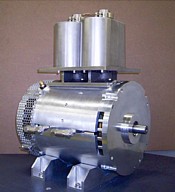
The development comes as demand for electric vehicles grows, and as manufacturers step up efforts to improve battery and motor performance to increase the distance that vehicles can travel on a single charge.

Sumitomo intends to further improve the motor with the aim of putting a vehicle on the market in the not-too-distant future. The company is looking to develop superconductor motors for buses and trucks as well.


Back To Top PM Quote Reply  

 Posted: Sun Jun 15th, 2008 02:17 am
  PM Quote Reply
150th Post
Joe Kelley
Administrator
 

Joined: Mon Nov 21st, 2005
Location: California USA
Posts: 6399
Status: 
Offline
Mana: 
http://devicedaily.com/environment/new-material-absorbs-light-completely-and-generates-electricity.html/

A partnership between Duke University and Boston College turned out to be very beneficial for the science world, as they obtained a metamaterial that absorbs all the light it gets (no, it doesn’t make things invisible), thus capable of generating more energy even than the solar cells.


Back To Top PM Quote Reply

 Posted: Sun Jun 15th, 2008 01:21 pm
  PM Quote Reply
151st Post
Joe Kelley
Administrator
 

Joined: Mon Nov 21st, 2005
Location: California USA
Posts: 6399
Status: 
Offline
Mana: 
http://www.informationclearinghouse.info/article20082.htm


Freedom Next Time

Propaganda as Journalism

By John Pilger Video


http://books.google.com/books?id=1ZRoDgG2vQ0C&pg=PA1&lpg=PA1&dq=thomas+paine+bastille+of+words&source=web&ots=96AkWE5THl&sig=vThOLjcHZCnrBPPdNo8EO9Q2FrU&hl=en&sa=X&oi=book_result&resnum=1&ct=result#PPA17,M1

Last edited on Sun Jun 15th, 2008 01:23 pm by Joe Kelley

Back To Top PM Quote Reply  

 Posted: Tue Jun 17th, 2008 07:13 am
  PM Quote Reply
152nd Post
Joe Kelley
Administrator
 

Joined: Mon Nov 21st, 2005
Location: California USA
Posts: 6399
Status: 
Offline
Mana: 
http://www.physorg.com/news132830327.html

Different interpretations of quantum mechanics lead to different answers. The most common view is that a quantum measurement is finished as soon as the photons are absorbed by detectors.


In the physicists’ experiment, the detection of each photon by a single-photon detector triggers a voltage to a piezoelectric actuator. The actuator expands, which in turn causes a tiny gold-surfaced mirror to move. By measuring the mirror displacement, the researchers could confirm by the gravity-quantum connection that the quantum measurement had been successfully finished. All of the steps – from photon detection to mirror movement – take about 7.1 microseconds, which is significantly less than the 60 microseconds it would take a photon to cover the 18 km between interferometers. So measurements made simultaneously at each of the interferometers could not be been influenced by anything traveling at – or even a few times more than – the speed of light.


Altogether, the experiment serves to fill a loophole by ruling out any kind of communication between two entangled particles separated by a distance, provided the collapse happens only after a mass has moved. By spatially separating the entangled photons, the test once again confirms the nonlocal nature of quantum correlations.


http://www.physorg.com/news132839991.html
The findings go against one prominent theory that says children can only show smart, flexible behavior if they have conceptual knowledge – knowledge about how things work, said Vladimir Sloutsky, co-author of the study and professor of psychology and human development and the director of the Center for Cognitive Science at Ohio State. "Children have more powerful learning skills than it was thought previously," he said. "They can show evidence of flexible learning abilities without conceptual knowledge and without being aware of what they learned."


Back To Top PM Quote Reply

 Posted: Wed Jun 18th, 2008 03:28 pm
  PM Quote Reply
153rd Post
Joe Kelley
Administrator
 

Joined: Mon Nov 21st, 2005
Location: California USA
Posts: 6399
Status: 
Offline
Mana: 
http://cleantechnica.com/2008/06/17/10-us-electricity-from-solar-by-2025/

The Utility Solar Assessment Study produced by Clean Edge and Co-op America finds that solar energy is already reaching cost parity with conventional sources in some areas of the U.S. where electric rates are highest. By 2015, this will be achieved in many more areas, including Boston, San Diego, and New York. By 2025, cost parity will be achieved throughout the U.S.

The implications of this are huge. The U.S. solar photovoltaic market now relies heavily on state incentives to lower the cost of solar energy. Many people utilize solar energy because it is “the right thing to do” or businesses like the positive publicity solar brings.

Please remember how PRICE and COST can easily confuse the Cost/Benefit calculation.

Currently the cost/benefit reality favors benefit, cearly, since no other explanation is needed to make sense of the growth in this human industry.

The bottom line is more POWER at lower cost.

Do you want more POWER at lower cost?

Some people do, other's may not be up to speed yet.


Back To Top PM Quote Reply  

 Posted: Wed Jun 18th, 2008 04:41 pm
  PM Quote Reply
154th Post
Joe Kelley
Administrator
 

Joined: Mon Nov 21st, 2005
Location: California USA
Posts: 6399
Status: 
Offline
Mana: 
http://gas2.org/2008/06/17/company-turns-familiar-gas-cars-into-electric-vehicles/

Cool. How much will it cost? Glad you asked. How about a slick $40,000 for an all electric Toyota Yaris hatchback? Or $60,000 for the Mini? Come on now, I know you wanted that Beemer, but let’s be realistic, the price of gas is only rising and you never liked going to get oil changes anyways.


http://gas2.org/2008/05/27/an-electric-car-you-can-buy-today-the-20k-triac-ev/


OK, you aren’t going to fit a family of 5 in there, but that’s not what it’s made for. Green Vehicles, manufacturer of the 3-wheeled TRIAC EV, calls it a “modern freeway commuter,” because the zero-emissions vehicle can reach 80 mph and will get you into the carpool lane with a single driver. Safety-wise, it has a structural steel cage the company says is the “same metal skeleton used in race cars” and a low center of gravity to maintain balance (but surprisingly has no airbags).

Back at home, it takes about 6 hours to charge the car’s lithium-ion batteries at an estimated cost of about 2 cents per mile. Not a bad deal if you can afford the $20,000 price tag. The company website says the TRIAC EV is currently available at dealerships in San Jose and Mill Valley, California, and should be more widely available in the future..


2 cents per mile.

Now compare:

At 4 dollars per gallon of gasoline

At 30 miles per gallon.

4 dollars per 30 miles

400 pennies per 30 miles

400 divided by 30 equals 13. 3

13 cents per mile

Not including oil changes.


Last edited on Wed Jun 18th, 2008 04:44 pm by Joe Kelley

Back To Top PM Quote Reply

 Posted: Wed Jun 18th, 2008 04:58 pm
  PM Quote Reply
155th Post
Joe Kelley
Administrator
 

Joined: Mon Nov 21st, 2005
Location: California USA
Posts: 6399
Status: 
Offline
Mana: 
http://www.businessweek.com/innovate/content/jun2008/id20080616_955452.htm?campaign_id=rss_daily


Enter Think Global, a Norwegian upstart plotting a U.S. invasion via pint-size, affordable electric cars. Think has been selling gas-free, Lilliputian city cars in Europe and will start peddling them to fuel-crunched Americans in 2009. The company's newly formed North American division has high hopes for Think's existing models—and even higher ones for the upcoming Th!nk Ox, a concept unveiled at the Geneva International Motor Show earlier this year.

An electrified people's car for the 21st century, the Ox is a preview of Think's next-generation production vehicle, due out in 2011. Roughly the size of a Toyota (TM) Prius, the Ox can travel between 125 and 155 miles before needing a recharge, and zips from zero to 60 miles per hour in about 8.5 seconds. Its lithium-ion batteries can be charged to 80% capacity in less than an hour, and slender solar panels integrated into the roof power the onboard electronics. Inside, the hatchback includes a bevy of high-tech gizmos such as GPS navigation, a mobile Internet connection, and a key fob that lets drivers customize the car's all-digital dashboard. Pricing has yet to be announced, but the company's current vehicles cost less than $25,000.


Back To Top PM Quote Reply  

 Posted: Thu Jun 19th, 2008 02:09 pm
  PM Quote Reply
156th Post
Joe Kelley
Administrator
 

Joined: Mon Nov 21st, 2005
Location: California USA
Posts: 6399
Status: 
Offline
Mana: 
 

http://www.ecogeek.org/content/view/1769/68


So, simplifying this, they're breaking water into hydrogen and oxygen and then burning hydrogen and oxygen to create water. This is, of course, possible, but you can't get more energy out of the system than you put in. Otherwise, it's simply a perpetual motion machine.

If it worked, it could sit on the driveway and make energy all day every day and power the entire world without you ever needing to put anything in it.


That above is not the whole truth.

Water is added to the fuel supply and water is an exhaust, if less water is added into the fuel tank than the water that is exhausted out of the exhaust pipe the car will stop running when the car runs out of water in the fuel tank.

Why is that not easy to see?

I think it is clearly understood when demonstrated.

I have not yet managed to test any of those products on-line.

I have tracked two suppliers of water fuel devices.

I can check back on those suppliers now:

http://hytechapps.com/

Demonstrations:

http://hytechapps.com/company/press

Note the dates: 

CNN May 23, 2006

That supplier has yet to offer a water fuel device for individual sale and use in automobiles. They make water fuel devices for industrial welding.

Next:

http://www.google.com/search?hl=en&fkt=1843&fsdt=14578&q=Hydro-Gen+the+ultimate+fuel+saving+device

I had to Google for the site I’ve tracked for a few years. That supplier no longer maintains the original web page (click on the first links in the search). I saw that supplier grow from a basic web page offering one device to a more professional web page offering more than one device (large and small devices for trucks and cars).

The process by which water is converted from water to hydrogen and oxygen for fuel requires power. If the power in-put lowers while the power output remains the same, then less water is required to accomplish the same work i.e. more the car PLUS convert water into hydrogen and oxygen.

There is one method or process that can convert water into hydrogen and oxygen. That process requires a known amount of power in that process and that known amount of power is known to be less that the power that is contained in the oxygen and the hydrogen.

Therefore:

Power input is < power output

The problem is that the margin of power input to power output is very small. It takes almost as much power to convert water into hydrogen and oxygen as the power contained in hydrogen and oxygen.

Like this:

Suppose that it takes 10 watts of power to convert 10 ounces of water into 5 ounces of hydrogen and 5 ounces of oxygen.

That would be 10 watts of input power to get a known amount of hydrogen and oxygen.

Now suppose that 5 ounces of oxygen and 5 ounces of hydrogen contain 20 watts of power.

10 watts < 20 watts

Input power is less than output power

20 watts > 10 watts

Output power is greater than input power.

That must be seen in reality in a demonstrable way.

Example:

Water is poured into a bottle and the bottle is attached to a car.

The car runs on gasoline. The car starts with the power in the battery on the car.

The car uses the power of the gasoline to turn an electric power producer called an alternator.

The alternator produces 15 watts of power (this is an abstract number not a specific and accurate number for any specific alternator).

5 watts of power charge the battery and run the car electric ignition system.

10 watts of power convert water into hydrogen and oxygen.

20 watts of hydrogen and oxygen go into the gasoline fuel supply, mix with the oxygen and gasoline, and fuels the car.

Gasoline, oxygen, hydrogen, plus argon, nitrogen, and carbon dioxide from the atmosphere are consumed in the internal combustion engine.

Some of the gasoline is not completely burned. Some of the oxygen is not completely burned. Some of those fuels combine with some of the other fuels and become exhaust gases and exhaust liquids like: water, carbon monoxide, hydrocarbons (gasoline vapor), nitrous oxide.

If the amounts of hydrocarbons that come out are greater than the gasoline in the gas tank, then something is fishy.

No one is claiming that a pipe can be hooked up to exhaust pipe and that pipe attacked to the engine intake where the car can then magically fuel itself.

That is not demonstrable, as far as I know.

There are some people who claim that the current method of processing water into the separate parts (electrolysis) is relatively costly compared to an as yet not mass produced process that is relatively less costly, where the power required to separate water into hydrogen and oxygen is less that current methods (electrolysis).

That method of separating water into hydrogen and oxygen has been called “cracking”.

No, I’m not on crack.

Assuming something can’t happen is as stupid as assuming that something can happen.

Show me?

Or

What is the cost of showing me?

http://waterpoweredcar.com/stanmeyer.html

http://www.google.com/search?hl=en&fkt=610&fsdt=1641&q=Stan+Meyer%27s+Water+Powered+Dune+Buggy

http://www.overunity.com/


Last edited on Thu Jun 19th, 2008 03:11 pm by Joe Kelley

Back To Top PM Quote Reply

 Posted: Fri Jun 20th, 2008 01:05 pm
  PM Quote Reply
157th Post
Joe Kelley
Administrator
 

Joined: Mon Nov 21st, 2005
Location: California USA
Posts: 6399
Status: 
Offline
Mana: 
http://www.thedailygreen.com/green-homes/eco-friendly/evergreen-solar-panels-460608

According to Evergreen, the carbon footprint of these new panels is up to 50% smaller than those of competitors, and they have a quicker energy payback -- reportedly as fast as 12 months for installed panels. This last point is particularly exciting, since the amount of energy required to make solar panels has long been a bone of contention among critics of the technology.

Back in the late 90s, energy paybacks for solar panels were as high as seven years. Today, they are often reported as "1-5 years."


Note the employment of the Pay-Back time frame or Liberty Day.

The cost of the Solar Panel is known.

The production rate is known.

The time when the production rate pays-off the cost of the Solar Panel is Liberty Day and from that day on the Solar Panel produces free power.


Back To Top PM Quote Reply  

 Posted: Fri Jun 20th, 2008 03:58 pm
  PM Quote Reply
158th Post
Joe Kelley
Administrator
 

Joined: Mon Nov 21st, 2005
Location: California USA
Posts: 6399
Status: 
Offline
Mana: 
http://waterpoweredcar.com/

Back To Top PM Quote Reply

 Posted: Sun Jun 22nd, 2008 03:26 pm
  PM Quote Reply
159th Post
Joe Kelley
Administrator
 

Joined: Mon Nov 21st, 2005
Location: California USA
Posts: 6399
Status: 
Offline
Mana: 
http://www.dailytech.com/MIT+Students+Develop+Revolutionary+Solar+Dish+That+is+Hot+Enough+to+Melt+Steel/article12153.htm


The solar industry is booming.  With waves of investment and grants, the solar power industry is for the first time becoming a serious business.  New power plants will soon be pumping power out to consumers, while other firms market to sell panels directly to the consumer, providing them with a more direct means of experiencing solar energy.


There are many forms of solar power technology.  Today the most dominant is photo-voltaics, which comprise the traditional solar panels that come to mind when one thinks of solar power.  However, there are other promising ways of capturing the sun's energy that are merely less developed.


Back To Top PM Quote Reply  

 Posted: Sun Jun 22nd, 2008 04:08 pm
  PM Quote Reply
160th Post
Joe Kelley
Administrator
 

Joined: Mon Nov 21st, 2005
Location: California USA
Posts: 6399
Status: 
Offline
Mana: 
http://www.dailymail.co.uk/news/article-1027956/First-picture-4billion-glass-tower-save--dwarf--Battersea-Power-Station.html


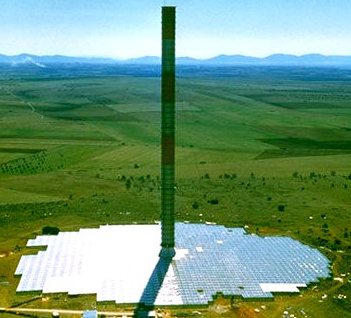
The sun will heat the air under the Dome, causing it to rise up the tower, known as the chimney.

That will in turn suck in air from outside the glass canopy, which will will stop at third-storey level, creating a constant breeze that will cool the offices.

The chimney will surround apartments up to 240 metres but the top 60 metres will be an empty glass tube.

The absence of electricity-hungry air conditioning will help the developers achieve their target of carbon neutrality, making the project hugely attractive to "progressive" tenants such as Google and Apple that the developers hope to attract.

Rob Tincknell, managing director of Treasury Holdings UK, said: 'This is not a token gesture, it will make a serious dent in the level of emissions.


?

http://en.wikipedia.org/wiki/Solar_updraft_tower


http://www.greenoptimistic.com/2008/02/06/solar-tower-produce-energy-using-air-turbines/


http://www.youtube.com/watch?v=0aDUtzV1yzI&feature=related

Last edited on Sun Jul 6th, 2008 09:54 am by Joe Kelley

Back To Top PM Quote Reply

Current time is 03:42 pm Page:  First Page Previous Page  ...  3  4  5  6  7  8  9  10  11  12  13  ...  Next Page Last Page    
Power Independence > Good News > Good News > More Top


UltraBB 1.17 Copyright © 2007-2008 Data 1 Systems