 |
PM |  | |
Quote | | |
Reply | | |
Full Topic | |
| Joined: | Mon Nov 21st, 2005 |
| Location: | California USA |
| Posts: | 6399 |
| Status: |
Offline
|
| Mana: |    |

https://www.archives.gov/publications/prologue/2000/winter/garrisons-constitution-2.html
An advertisement for runaway slaves. C. C. Pinckney of South Carolina recognized that the adoption of the fugitive slave clause in the Constitution handed slaveholding states a new right—"to recover our slaves in whatever part of America they may take refuge."
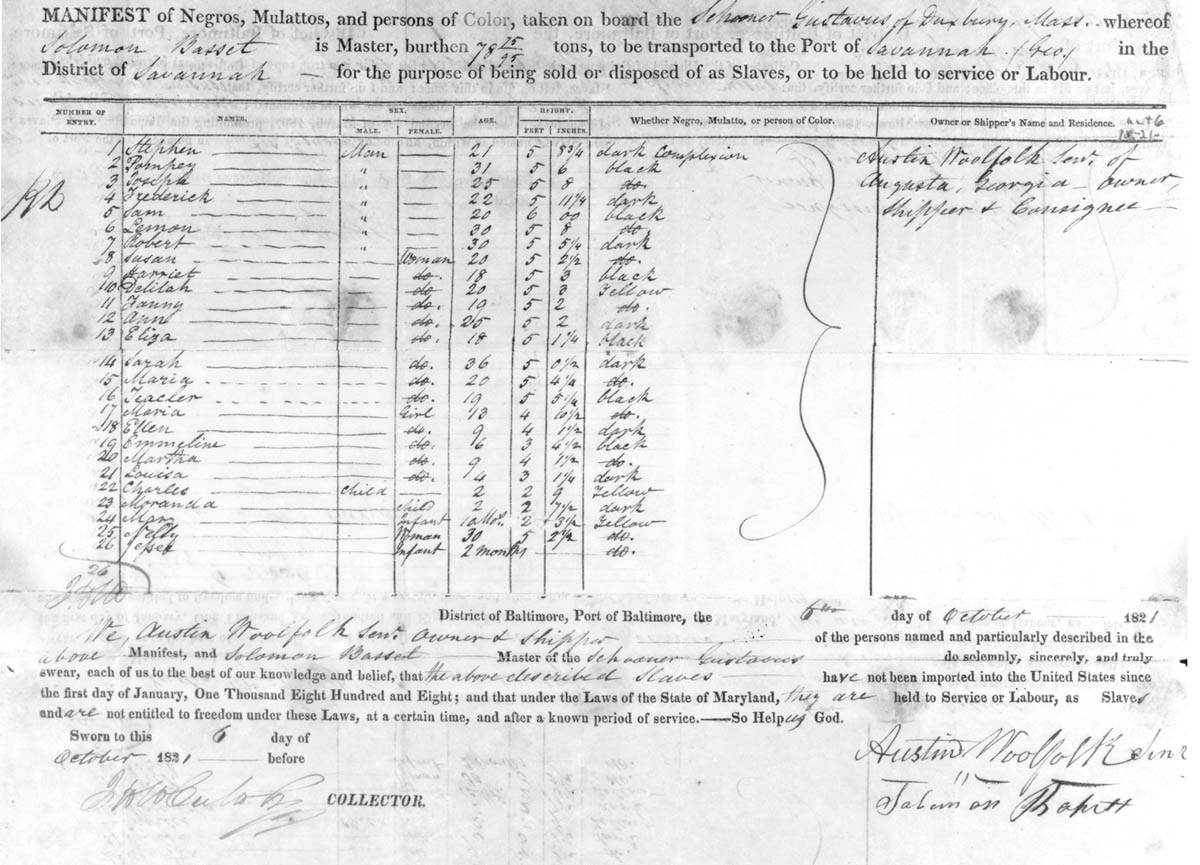
One of the compromises made by the Constitutional Convention was to close the African slave trade in 1808. This manifest from the schooner Gustavus shows the increased value of slaves in the domestic market after that date. (Records of the U.S. Customs Service, RG 36)
________________________________
The abolitionist William Lloyd Garrison thought the U.S. Constitution was the result of a terrible bargain between freedom and slavery. Calling the Constitution a "covenant with death" and "an agreement with Hell," he refused to participate in American electoral politics because to do so meant supporting "the pro-slavery, war sanctioning Constitution of the United States." Instead, under the slogan "No Union with Slaveholders," the Garrisonians repeatedly argued for a dissolution of the Union.
Part of Garrison's opposition to continuing the Union stemmed from a desire to avoid the corruption that came from participating in a government created by the proslavery Constitution. But this position was also at least theoretically pragmatic. The Garrisonians were convinced that the legal protection of slavery in the Constitution made political activity futile, while support for the Constitution merely strengthened the stranglehold slavery had on America. In 1845 Wendell Phillips pointed out that in the years since the adoption of the Constitution, Americans had witnessed "the slaves trebling in numbers—slaveholders monopolizing the offices and dictating the policy of the Government-prostituting the strength and influence of the Nation to the support of slavery here and elsewhere—trampling on the rights of the free States, and making the courts of the country their tools." Phillips argued that this experience proved "that it is impossible for free and slave States to unite on any terms, without all becoming partners in the guilt and responsible for the sin of slavery."
Garrison's Constitution
The Covenant with Death and How It Was Made
By Paul Finkelman, 2000
https://www.archives.gov/publications/prologue/2000/winter/garrisons-constitution-1.html
Thomas Jefferson, A Summary View of the Rights of British America, August 1774
"For the most trifling reasons, and sometimes for no conceivable reason at all, his majesty has rejected laws of the most salutary tendency. The abolition of domestic slavery is the great object of desire in those colonies, where it was unhappily introduced in their infant state. But previous to the enfranchisement of the slaves we have, it is necessary to exclude all further importations from Africa; yet our repeated attempts to effect this by prohibitions, and by imposing duties which might amount to a prohibition, have been hitherto defeated by his majesty’s negative: Thus preferring the immediate advantages of a few African corsairs to the lasting interests of the American states, and to the rights of human nature, deeply wounded by this infamous practice. Nay, the single interposition of an interested individual against a law was scarcely ever known to fail of success, though in the opposite scale were placed the interests of a whole country. That this is so shameful an abuse of a power trusted with his majesty for other purposes, as if not reformed, would call for some legal restrictions. . . "
http://teachingamericanhistory.org/files/2018/09/Documents-and-Debates-in-American-History-and-Government-Vol.-1-and-Vol.-2.pdf
Conceived in Liberty, by Murray Rothbard
Chapter 18
Slavery in Virginia
Page 584
"The prevalent practice of fornication by the masters with the female slaves was regarded as “a pleasant method to secure slaves at a cheap rate.”