 |
PM |  | |
Quote | | |
Reply | | |
Full Topic | |
| Joined: | Mon Nov 21st, 2005 |
| Location: | California USA |
| Posts: | 6399 |
| Status: |
Offline
|
| Mana: |    |

Ouyang Ziyuan, head of the first phase of lunar exploration, was quoted on government-sanctioned news site ChinaNews.com describing plans to collect three dimensional images of the Moon for future mining of Helium 3: "There are altogether 15 tons of helium-3 on Earth, while on the Moon, the total amount of Helium-3 can reach one to five million tons."
"Helium-3 is considered as a long-term, stable, safe, clean and cheap material for human beings to get nuclear energy through controllable nuclear fusion experiments," Ziyuan added. "If we human beings can finally use such energy material to generate electricity, then China might need 10 tons of helium-3 every year and in the world, about 100 tons of helium-3 will be needed every year."
http://www.google.com/search?hl=en&q=helium-3
http://www.wired.com/science/space/news/2006/12/72276
http://www.geotimes.org/may08/article.html?id=feature_moon.html
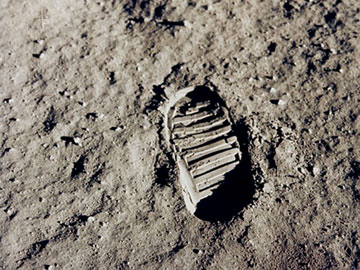
The moon may also contain a potentially valuable future energy resource in the form of the isotope helium-3. Helium-3 is a small component of solar wind, streams of charged particles ejected from the sun that have bombarded objects in the solar system for billions of years, says nuclear engineer Gerald Kulcinski of the University of Wisconsin at Madison. Helium-3 exists in Earth’s interior, but there is little at the surface; planets with a magnetic field or an atmosphere — including Mercury, which has a magnetic field, Venus, which has a thick atmosphere and Earth, which has both — are protected from the plasma streams, and thus don’t accumulate the isotope. That leaves the moon as the closest object in the solar wind’s path, and helium-3 has been piling up in the regolith for 4.5 billion years, Kulcinski says.
The isotope’s importance lies in its potential to become a clean source of nuclear energy, Kulcinski says. “We never think of the moon as a source of energy, but there’s 10 times more energy in helium-3 on the moon than there ever was in fossil fuels on Earth,” he says.